



Imagine it’s the last day of a trading competition. You’re in third place, just a few percentage points away from first. You’re tempted to make a high-risk trade to close the gap—but this is precisely the mistake that has cost thousands of traders their wins. Statistics show that 70% of trading competition participants lose all their profits in the final 48 hours. Trading competitions are battlefields where technical skills determine only 30% of your success; the remaining 70% depends on risk management, emotional control, and disciplined strategy execution.
In this article, you’ll learn how to use professional risk management principles in trading competitions not only to prevent heavy losses but also to climb to top rankings with stability and discipline—just like traders competing in Trendo’s major competition today.
What is Risk Management in Trading Competitions and Why Does It Matter?
Risk management in trading competitions means determining the exact amount of capital you’re willing to lose in each trade, but in a competitive environment, this definition becomes more complex. Unlike everyday trading where your goal is gradual account growth, in competitions you must simultaneously generate profits and outpace competitors who may be taking irrational risks. This apparent contradiction causes many traders to abandon their principles under ranking pressure in the final days of competitions, destroying all their achievements by increasing leverage or entering trades without analysis.
The fundamental difference between risk management in competitions versus regular trading is that you must not only protect your capital but also control its growth rate. A professional competition trader knows the goal isn’t maximum return—it’s maximum sustainable return. When your competitors enter with 10% risk per trade and perhaps make 50% profit in one day, you must stick to your 2-3% risk plan because you know the next day that same competitor will likely lose 40%. This is the most important lesson global competition statistics teach us:
Traders who place in the top 20% of competitions have an average daily risk half that of lower-ranked traders.
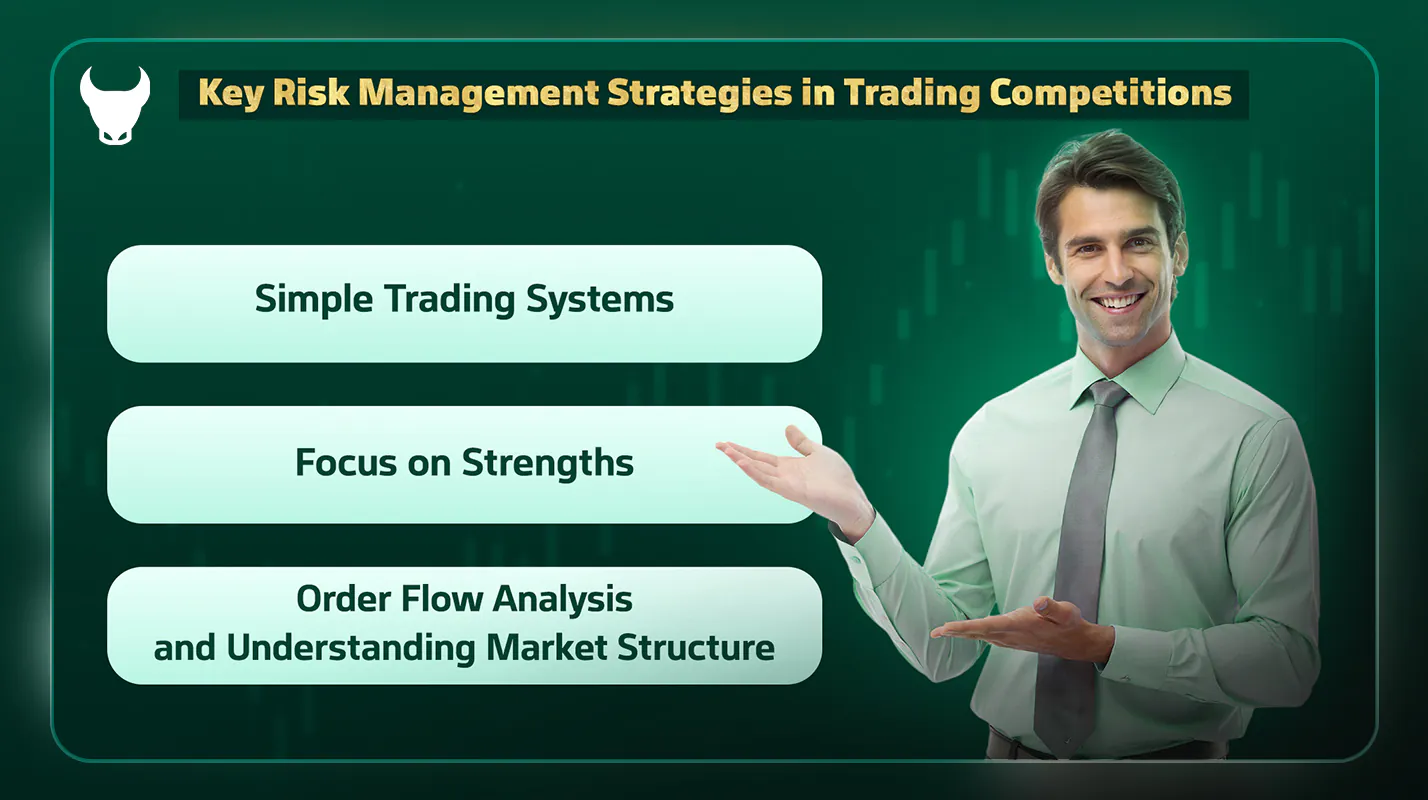
Key Risk Management Strategies in Trading Competitions
Now that we understand how critical risk management is in competitions, we need to know how to implement it practically. The first step is to determine before the competition starts the maximum percentage of capital you’ll risk in a single trade. The professional standard for competitions is between 1-3%—no more. This number may seem small, but when you execute 10 consecutive trades, even with this conservative percentage you can achieve 20-30% growth, while if you make a mistake in one trade, you only fall back 2% not 20%.
Using stop-loss and take-profit orders in competitions is non-negotiable. Successful traders know exactly at what price they should exit before opening any position—whether profitable or loss-making. This prevents emotional decision-making. Suppose you enter a trade that’s given you 5% profit, but your analysis says you should exit at 3%. If the take-profit isn’t set in advance, you’ll likely get greedy and wait until that profit turns into a loss. This greed acts more lethally than fear in competitions.
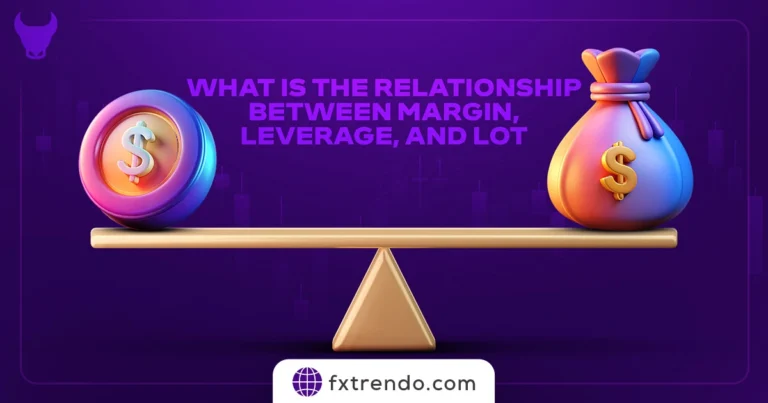
But the most dangerous trap in competitions is over-leverage—using excessive leverage. When you see your competitor made 80% profit in one day with 1:2000 leverage, you’re tempted to do the same. But what’s usually not mentioned is: most traders who use high leverage in competitions without sufficient knowledge get margin calls within 3 days. High leverage means even a 1% market move against you can destroy 10 or 20% of your capital. So the golden rule is:
In competitions, your leverage should be set based on your strategy, not based on competitors’ rankings.
Simple Trading Systems: The Master Key to Stability Under Competitive Pressure
One of the biggest mistakes traders make in competitions is over-complicating their strategies. They think if they use 15 different indicators or change strategies every day, they’ll have a better chance of winning. But reality is the opposite: winning traders usually have 4-5 simple, rule-based trading systems they’ve tested in different market conditions. These systems have precise specifications—when to enter, when to exit, how much to risk—and most importantly, they eliminate emotions from the equation.
Imagine having a system that says: “If price crosses above the 50-day moving average and trading volume is 20% above average, enter with 2% risk and stop-loss 1% below entry point.” This system is simple, repeatable, and most importantly, requires no in-the-moment decision-making. In competitions where stress is high and rankings change every minute, having such a system is like having a roadmap in a forest—you just need to follow the path.
Before entering the competition, these systems must be backtested—meaning tested on historical market data. If a system has had a 60% success rate over the past 100 trades and an average profit-to-loss ratio of 2:1, you can confidently use it in the competition. But if you’ve only tested it on one good market week, it will likely fail in actual competition conditions.
Competition winners are those who’ve practiced their strategy hundreds of times before starting—not those who try new ideas during the competition.
Focus on Strengths: Why Specialization is Better Than Being a Jack-of-All-Trades
In trading competitions, there’s a truth few accept: you can’t be good at everything. You might be an excellent scalper trading in 5-minute timeframes, or perhaps a swing trader who holds positions to capture complete swings. Each of these styles requires a different mindset and skill set, and attempting to switch between them during the competition will certainly lead to failure.
Suppose by day three of the competition you’ve made 15% profit with your swing strategy, but suddenly you see a competitor made 25% growth in one day with a scalping strategy. You’re tempted to change your style. But scalping requires constant market monitoring, quick reactions, and high stress tolerance—things you may not have practiced. The result? Not only will you not achieve that 25%, but you’ll lose your previous 15% as well.
Specialization means choosing one specific market—forex or crypto—and one trading style, and mastering it. When you focus only on the EUR/USD pair, you know its behavior, understand which hours it’s more volatile, and how it reacts to economic news.
Order Flow Analysis and Understanding Market Structure
So far we’ve discussed capital management and trading systems, but there’s another component that separates professional traders from amateurs: understanding market structure and order flow analysis. In trading competitions, just looking at charts and indicators isn’t enough; you must understand where real money is flowing and how large institutional orders are directing price.
Order flow shows you at any moment how many people are buying versus selling, and more importantly, what volume of orders is accumulated at different price levels. When you see buying volume suddenly triple at a support level, this signal means institutions are taking positions and you can move with them.
Combining this analysis with macroeconomic knowledge is also important. Suppose the European Central Bank is scheduled to announce interest rates. If you know what market expectations are and how order flow is forming before the news, you can position yourself before the major price move. Of course, these types of trades carry higher risk, but when combined with proper risk management—risking only 1.5% of capital for example—they can perform well in competitions.
“In trading competitions, winners aren’t those who make the most trades, but those who choose the best trades.”
Fatal Mistakes in Competition Risk Management
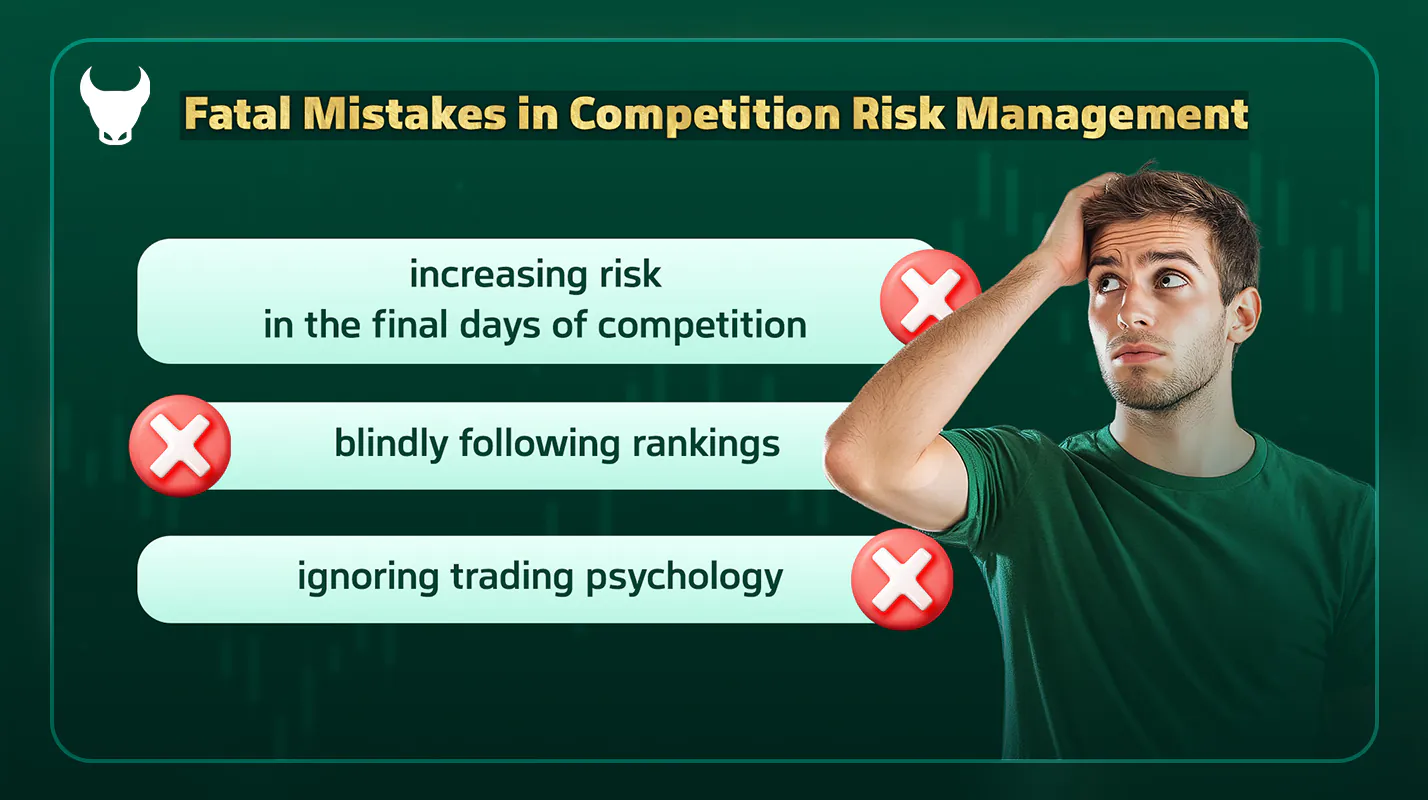
Now that we’ve learned the right strategies, it’s time to identify traps that bring even experienced traders to their knees. The first and most common mistake is increasing risk in the final days of competition. Imagine you’re in fifth place with only 48 hours until competition end. Your gap with first place is 12%. The voice inside your head says: “If you make one big trade now with 10% risk, you can catch up.” This is exactly when you should ask yourself: Is this decision based on strategy or just psychological pressure from rankings?
Approximately 70% of traders who double their risk in the final 72 hours not only fail to improve their ranking but actually drop 3-5 places. The reason is simple—when you decide under pressure, the quality of your analysis decreases. The human brain under stress relies on emotional reflexes instead of logical thinking. So even if you’ve been successful with 2% risk throughout 80% of the competition, one wrong 10% trade can destroy everything.
The second mistake is blindly following rankings. Many traders check rankings several times an hour and change their strategy based on competitors’ moves. If they see first place traded a certain currency pair, they immediately open the same trade without analysis. But they forget that trader might be working with a completely different strategy, or that trade might even be a mistake. You can’t copy others’ paths and expect to reach their destination—because you don’t even know where their destination is.
The third trap is ignoring trading psychology. Competitions are environments full of excitement, fear, greed, and pressure. When your three consecutive trades lose, fear enters and you might skip the next trade—which is correct. Or conversely, when you have five profitable trades, you feel invincible and enter the sixth trade without sufficient analysis. Both states are deadly. Successful traders have an emotion management plan before the competition—for example, a rule that says after three consecutive losses, take a day off, or after each profitable trade, take a 15-minute break to let your mind return to normal state.
Trendo Traders’ Major Competition: An Opportunity for Real Practice
Now that you’ve learned the principles of risk management in competitions, the best way to solidify this knowledge is practice in a real competitive environment. Trendo Traders’ Major Competition from Black Friday to Christmas provides an attractive opportunity to apply these strategies. The top three with the highest profits receive cash prizes: first place $500, second place $300, and third place $200. Trendo also has a $500 raffle where 10 people are randomly selected and each receives a $50 prize—so even if you’re not in top rankings, you have a chance to win.
Participating in this competition is simple: just register with Trendo, fund your account, and then execute your trades according to competition terms. Results will be announced on Christmas Day.
More important than the prize is the experience you gain from this competition. Every mistake, every right decision, every moment you were tempted to take more risk but didn’t—all these are lessons with great future value. For more information and to read complete rules, visit the official Trendo’s Going Black campaign page. This opportunity is limited, so don’t miss the time.
Conclusion
If you’ve read this far, you’ve probably understood that risk management in trading competitions is something more than just setting stop-losses. Risk management is a complete philosophy for decision-making under pressure—a philosophy where patience, discipline, and self-control are worth more than speed and boldness. The real winners of trading competitions aren’t those who make the most trades or take the boldest risks. They’re those who know when to move and when to wait—and most importantly, when to say “no.”
Register with Trendo Broker and participate in the Traders Competition