



This article delves into the concept of Fair Value Gaps, exploring their origins, significance, and practical applications. By decoding the intricacies of FVGs, you’ll gain insights into identifying these gaps on price charts and incorporating them into your trading decisions.
Whether you’re a novice trader looking to expand your knowledge or an experienced professional seeking to refine your strategies, understanding FVGs can be a valuable addition to your trading toolkit.
Let’s uncover the hidden potential within the forex market and harness the power of Fair Value Gaps.
What is Fair Value Gap (FVG) in Forex?
In forex trading, a Fair Value Gap (FVG) refers to a significant price difference that occurs between two consecutive trading sessions.
This gap can happen due to unexpected market events, economic news, or sudden shifts in market sentiment. Unlike regular gaps that simply reflect a price change, an FVG highlights a disparity that the market may eventually “fill” or correct.
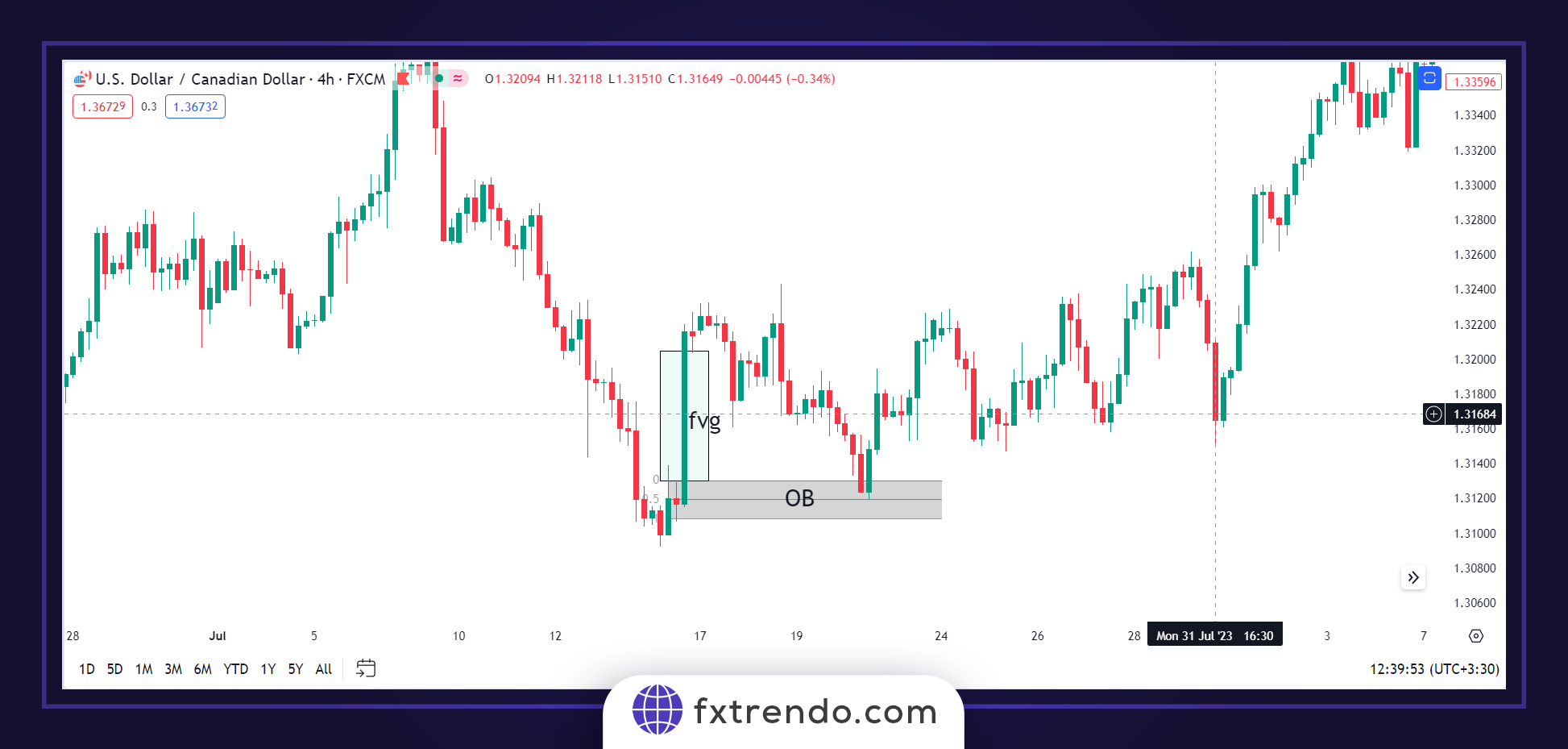
A visual example of the FVG pattern applied to the USDCAD 4-hour chart.
An FVG is the space on a price chart where trading didn’t occur at a specific price level. This gap often appears as a noticeable void between the close of one session and the open of the next. For traders, these gaps are important as they can signal potential trading opportunities. Prices often tend to move back to these levels to “fill” the gap, providing an opportunity for profit.
Identifying and understanding FVGs can help traders make more informed decisions. By recognizing these gaps, traders can anticipate potential market movements and better plan their entry and exit points. This strategic approach can be particularly useful in volatile markets where price gaps are more common.
Read more: What Is A Trading Strategy? Steps To Build A Winsome Trading Strategy In Forex
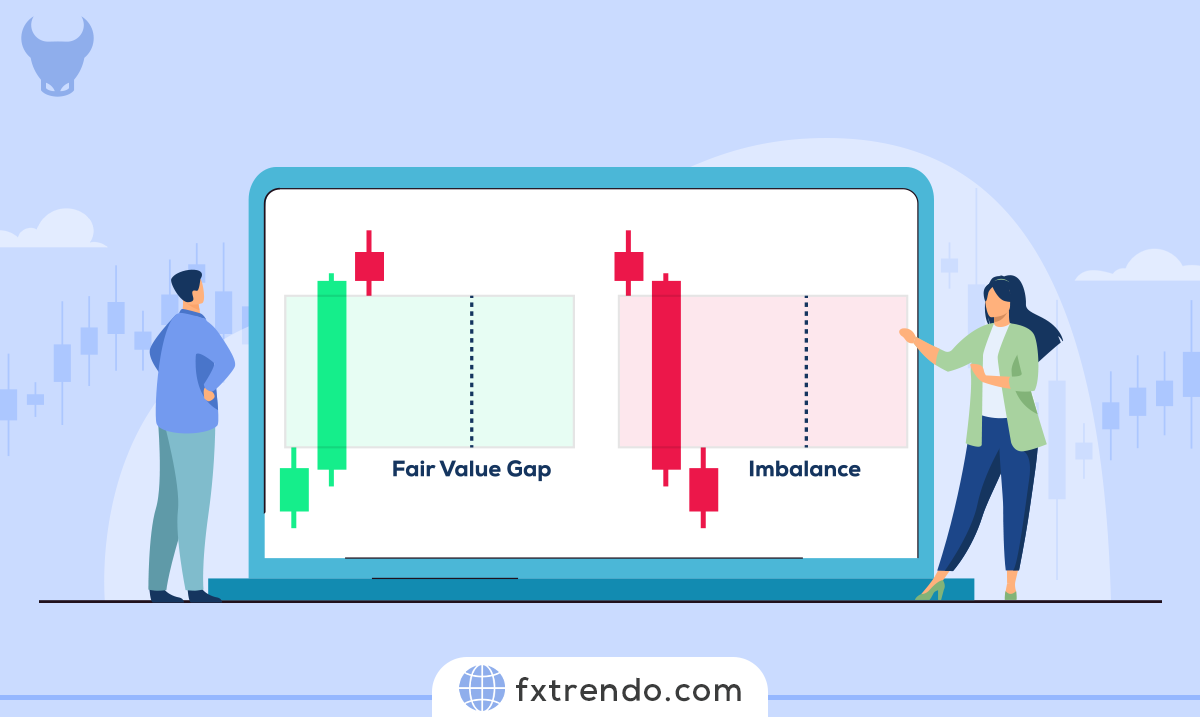
Deep Analysis: Difference Between Imbalance Pattern and Fair Value Gap
Many traders ask: what is fvg in forex and how does it differ from imbalance? While these concepts seem similar, they have crucial differences in structure, formation timing, and trading application.
Structural and Formation Differences
FVG in Forex:
- Precise three-candle pattern
- Gap between High of first candle and Low of third candle
- Rapid, sudden price movement (usually due to news or institutional entry)
- Formation time: Minutes to hours
Imbalance:
- Broader concept of supply-demand imbalance
- Can span multiple candles or even several days
- More gradual movement compared to fair value gap
- Formation: Gradual accumulation of buying/selling pressure
Timing and Location of Formation
| Feature | FVG Trading | Imbalance |
| Formation Time | Instant & rapid (1-3 candles) | Gradual (5-20 candles) |
| Chart Location | Usually mid-move | Often at trend start/end |
| Main Driver | Sudden news, institutional entry | Gradual sentiment shift |
| Signal Strength | High (75-80%) | Medium (60-65%) |
| Fill Probability | 70-80% | 50-60% |
How to Trade FVG in Forex
FVG Trading Strategy:
- Entry: When price returns to 50% or 75% of the fair value gap forex zone
- Stop Loss: Above/below complete FVG (typically 10-20 pips)
- Target: Next support/resistance level or next FVG
Imbalance Strategy:
- Entry: When price returns to entire imbalance zone
- Stop Loss: Outside complete imbalance range (typically 40-60 pips)
- Target: Key levels on higher timeframes
Tools to Identify Fair Value Gap and Imbalance
For Identifying FVG in Forex:
- Luxalgo FVG Indicator:
- Automatic fair value gap detection
- Shows fill percentage
- Manual Method – How to Identify a Fair Value Gap:
- Middle candle at least 2x size of surrounding candles
- Check gap between High/Low of first and third candles
- Verify with volume spike on middle candle
For Identifying Imbalance:
- Volume Profile:
- Low volume areas = potential imbalance
- Order Flow Tools:
- Footprint Charts
- Delta Volume
- Visual Method:
- Continuous price movement without significant pullback
- Consecutive long candles in one direction
Why is the Fair Value Gap Important in Forex Trading?
Fair Value Gaps (FVGs) play a crucial role in forex trading due to their potential to highlight market inefficiencies and create profitable opportunities. When these gaps occur, they indicate areas where the market hasn’t traded, often resulting from sudden news or significant events that cause sharp price movements. These gaps are important for several reasons:
1. Identifying Trading Opportunities: FVGs can signal potential trading setups. Since markets tend to move to fill these gaps, traders can anticipate price movements and position themselves to benefit from the expected correction.
2. Market Sentiment Analysis: The presence of an FVG often reflects strong market sentiment. By analyzing these gaps, traders can gain insights into the underlying sentiment driving the price changes and adjust their strategies accordingly.
3. Improving Entry and Exit Points: Understanding FVGs allows traders to refine their entry and exit points. By waiting for the gap to fill or using it as a signal for potential reversals, traders can make more informed decisions and enhance their profitability.
4. Risk Management: Incorporating FVGs into a trading strategy can also aid in managing risk. Recognizing these gaps helps traders set more precise stop-loss levels and target areas, minimizing potential losses and maximizing gains.
5. Enhancing Technical Analysis: FVGs add another layer to technical analysis, providing additional information that can complement other indicators. This holistic approach can improve the accuracy of market predictions and lead to better trading outcomes.
By integrating Fair Value Gap analysis into their strategies, traders can better navigate the complexities of the forex market, making more informed decisions and potentially increasing their chances of success.
Read more: What is a Candlestick? The use of Candles in Analysis and Trading Strategy
How to Identify Fair Value Gaps on Price Charts?
Identifying Fair Value Gaps (FVGs) on price charts can be a straightforward process once you know what to look for. Here’s a simple guide to help you spot these gaps:
1. Look for Sudden Price Movements: Fair Value Gaps often occur after significant price movements. These could be triggered by economic news, events, or major market shifts. Start by scanning your charts for any large, abrupt changes in price.
2. Identify the Gap: Once you spot a sudden price movement, look at the candles on the chart. An FVG is identified by a space between the close of one candle and the open of the next, where no trading took place at certain price levels. This creates a visible gap on the chart.
3. Analyze Different Time Frames: FVGs can appear on various time frames, from minute charts to daily charts. Analyzing multiple time frames can help you better understand the context of the gap and its potential impact.
4. Check for Volume Spikes: Significant gaps often come with high trading volumes. Check the volume indicators to see if there was an unusual spike during the gap formation. High volume can confirm the validity of the gap.
5. Mark the Gap Area: Use drawing tools on your charting platform to mark the gap area. This will help you keep track of the FVG and monitor if the price eventually moves to fill it.
6. Monitor the Price Action: After identifying an FVG, keep an eye on how the price behaves around the gap. Often, prices tend to revisit and fill these gaps over time, presenting potential trading opportunities.
By following these steps, you can effectively identify Fair Value Gaps on price charts. Recognizing these gaps allows you to anticipate market movements, enhancing your trading strategy and potentially increasing your chances of making profitable trades.
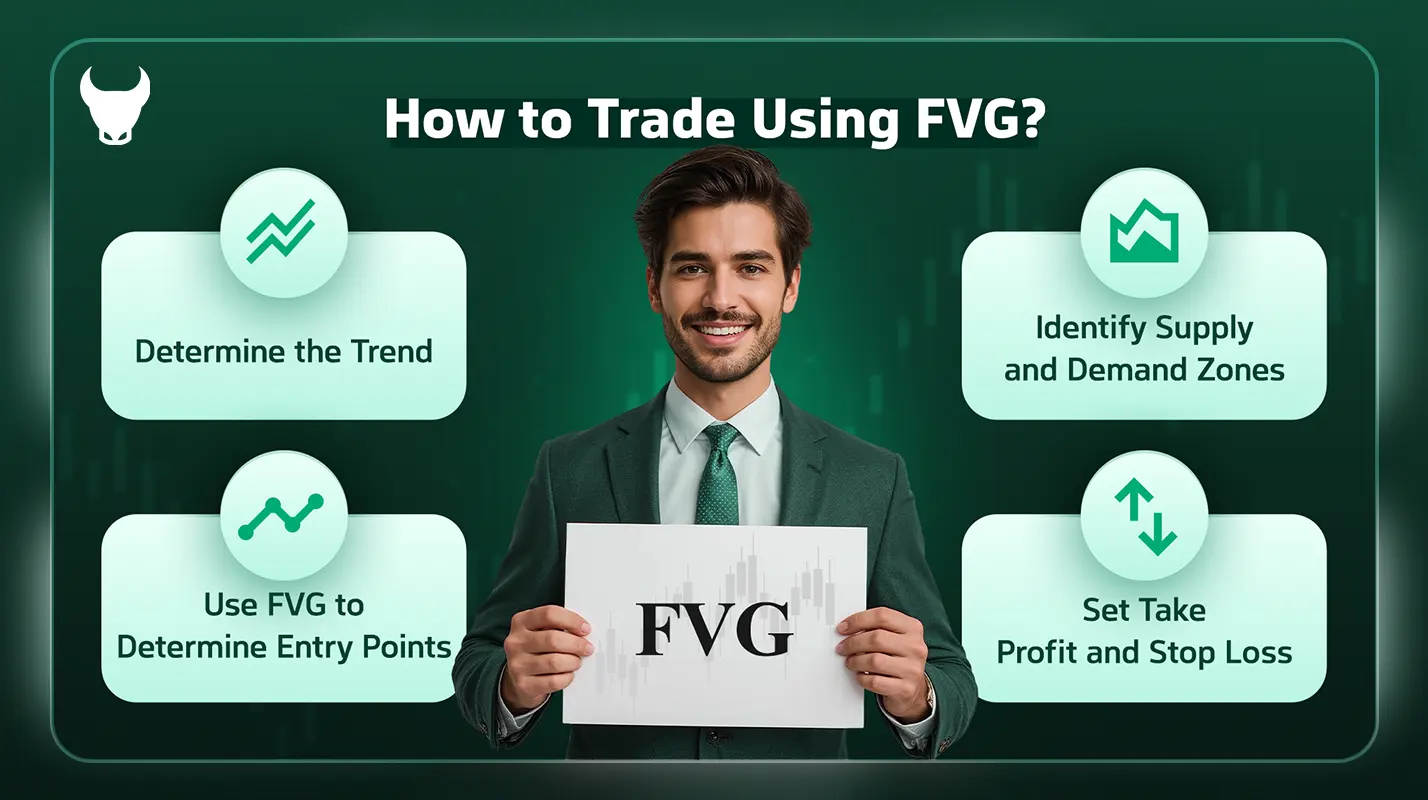
How to Trade Using FVG?
After identifying a Fair Value Gap (FVG), there are two main methods for trading it. The first method, which carries more risk, involves entering a trade in anticipation of the market reversing towards the FVG. The second, more reliable method, involves waiting for the gap to be filled and then entering a trade in the original direction of the market once a confirming candle has closed.
1. Determine the Trend
First, analyze the market structure to determine the trend. If the price is making higher highs and higher lows, the trend is bullish, and you should look for buying signals. Conversely, if the price is making lower highs and lower lows, the trend is bearish, and you should look for selling signals. If the market is ranging or choppy, it’s best to avoid trading until a new trend emerges.
2. Identify Supply and Demand Zones
Once the trend is established, identify order blocks or supply and demand zones that align with the trend. A simple way to draw these zones is to use the first candle that forms the FVG.
3. Use FVG to Determine Entry Points
At this stage, you should identify the formation of the Fair Value Gap. Wait for the price to fill this gap, and then enter a trade in the direction of the trend.
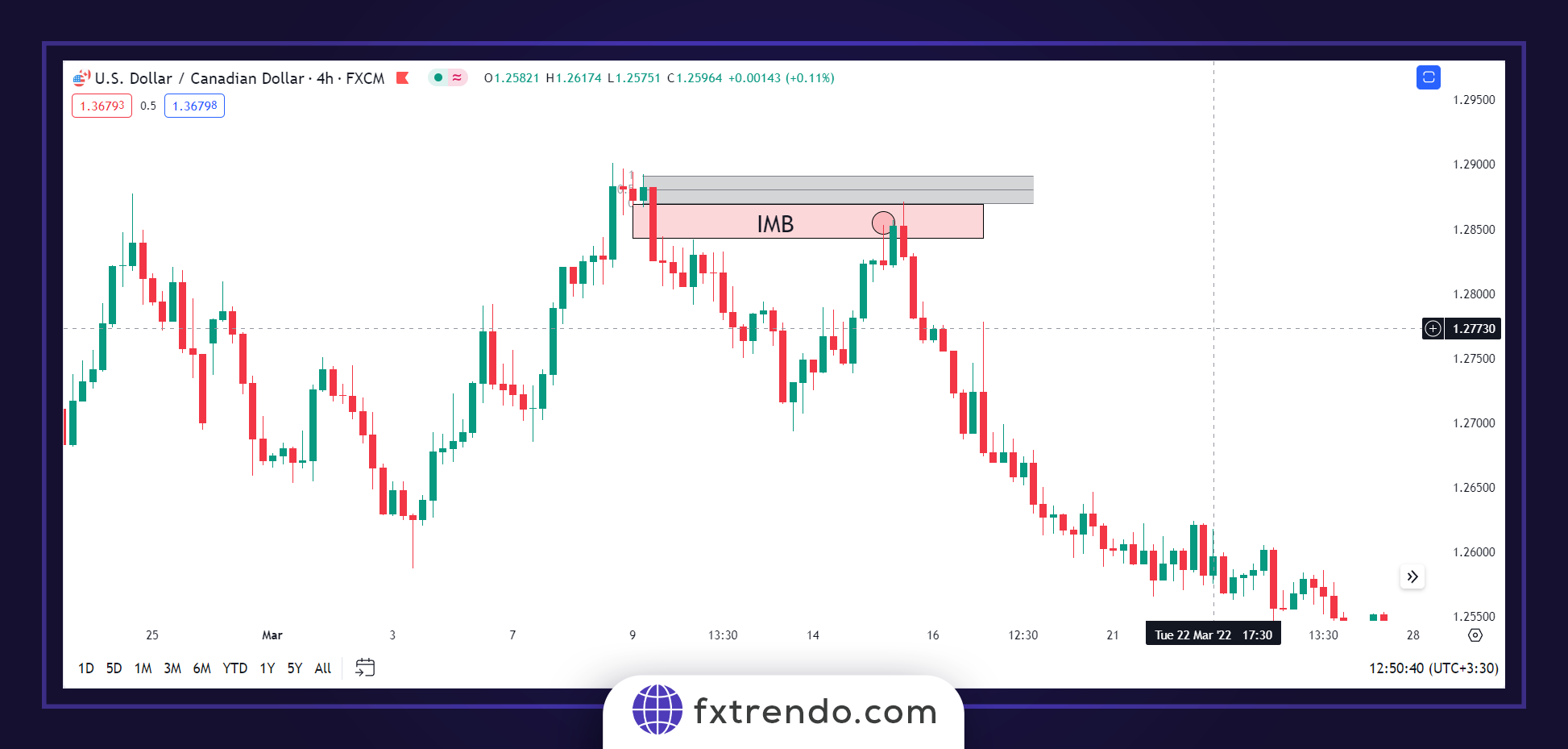
You can use FVG to determine the entry point.
4. Set Take Profit and Stop Loss
Like any trading strategy, risk management is essential. When executing trades based on the FVG strategy, set appropriate take profit and stop loss levels. This will protect your capital from sudden market movements. Your take profit should be near the next supply or demand zone, which indicates potential market reversal points. If the market continues to move strongly past these zones, you can stay in the trade.
By following these steps, you can effectively trade using Fair Value Gaps, enhancing your strategy and managing risks better.
Advantages and Disadvantages of Fair Value Gap Trading
Understanding the pros and cons of the fvg trading strategy is essential for success in how to trade fvg in forex markets.
Advantages of Using FVG Strategy:
- High Prediction Accuracy
- Success rate of 70-80% on medium timeframes (15-minute to 4-hour)
- Clear and measurable signals
- High fill probability (75%+ within first 48 hours)
Real Data: In a study of 500 fair value gap forex patterns on EUR/USD over 3 months, 380 instances (76%) filled within 2 days.
- Flexibility Across All Markets
- Applicable in forex, gold, stocks, crypto
- Effective on all timeframes (1-minute to daily)
- Combinable with other strategies for an enhanced fair value gap trading strategy
- Excellent Risk/Reward Ratio
- Typically 1:2 to 1:4 ratio
- Small and defined stop loss
- Logical and achievable targets
- Smart Money Identification
- Indicates institutional entry when learning what is fvg in forex
- Aligns with large traders
- Reduces risk of trading against the trend
Disadvantages and Challenges of FVG Trading:
- False Signals in Ranging Markets
- In low-volatility markets: 40-50% false fair value gap probability
- Solution: Use ATR filter (volatility above 20 for forex)
Example: During holidays (Christmas, New Year), false fvg in forex patterns triple in frequency.
- Need for Speed
- Small FVGs fill quickly (sometimes in 5-10 minutes)
- Requires constant monitoring for effective fvg trading
- Delayed entry means missed opportunity
- Incomplete Fills
- 25-30% of fair value gaps don’t fill completely
- May only fill 30-50% of the gap
- Solution: Enter at 50% FVG rather than waiting for 100%
- Timeframe Dependency
- FVG on 1-minute: Too much noise
- FVG on weekly: Fills too slowly
- Optimal for fvg strategy: 15-minute to 4-hour
Advantages vs Disadvantages Comparison Table:
| Aspect | Advantage | Disadvantage/Challenge |
| Accuracy | 70-80% win rate | 20-30% false signals |
| Speed | Quick signals | Requires immediate reaction |
| Risk | High R:R (1:3) | Incomplete fill in 25% cases |
| Complexity | Simple identification | Needs experience for filtering |
| Markets | All markets | Weak in ranging conditions |
Professional Tip for Fair Value Gap Trading Strategy: Combine fvg forex patterns with:
- Higher timeframe trend confirmation
- Volume analysis
- Key support/resistance levels
- News calendar awareness
This comprehensive approach to how to trade fvg in forex increases success rate from 70% to 85%+ based on professional trader statistics.
Strategies to Trade Using Fair Value Gaps
1. Trend Following
Identify the overall trend in the market. If the trend is upward (bullish), look for FVGs that suggest potential entry points for long (buy) trades. Conversely, in a downward (bearish) trend, look for FVGs indicating opportunities for short (sell) trades. This strategy aligns your trades with the prevailing market direction, reducing risk.
2. Gap Filling
Once an FVG is identified, wait for the market to start filling the gap. This involves monitoring the price as it moves back towards the gap. Enter the trade when the gap begins to fill, and exit when it is completely filled. This method takes advantage of the market’s tendency to correct itself.
3. Confluence with Other Indicators
Combine FVG analysis with other technical indicators such as moving averages, Fibonacci retracements, or support and resistance levels. This confluence increases the reliability of your trades. For instance, an FVG coinciding with a key Fibonacci level might provide a stronger trading signal.
4. Risk Management
Always set stop-loss orders to limit potential losses. Place your stop-loss just beyond the FVG to protect against adverse market movements. Additionally, set take-profit levels at logical points, such as the next support or resistance level, to secure your gains.
5. Time Frame Analysis
Analyze FVGs across different time frames. A gap on a longer time frame (like daily or weekly charts) may indicate a more significant trading opportunity compared to a shorter time frame (like 5-minute or hourly charts). This multi-time frame analysis can provide a broader market perspective.
6. Volume Confirmation
Check trading volumes to confirm the validity of the FVG. High volumes during the creation of a gap often signal strong market sentiment, increasing the likelihood that the gap will be filled. This helps filter out weaker signals and focus on more promising trades.
7. Patience and Discipline
Successful trading with FVGs requires patience and discipline. Avoid jumping into trades impulsively. Instead, wait for the right setup and confirmation signals. Following a structured approach can enhance your trading consistency.
By incorporating these strategies into your trading plan, you can effectively leverage Fair Value Gaps to identify potential trading opportunities and enhance your overall performance in the forex market.
Tips for Beginners on Using FVG in Forex
1. Start with Basic Knowledge
Before diving into Fair Value Gaps (FVGs), make sure you have a solid understanding of forex trading basics and technical analysis. This foundation will help you better grasp how FVGs work and their significance.
2. Use Demo Accounts
Practice identifying and trading FVGs on a demo account. This allows you to apply what you’ve learned without risking real money. Demo accounts simulate real market conditions, giving you a safe environment to hone your skills.
3. Keep It Simple
As a beginner, stick to simple strategies. Focus on identifying clear FVGs and trading them within the context of a strong trend. Avoid complex setups and excessive indicators that can overwhelm and confuse you.
4. Learn from Examples
Study past charts and analyze how FVGs formed and filled. Look for patterns and scenarios where FVGs provide good trading opportunities. This historical analysis can help you recognize similar situations in real-time trading.
5. Use Alerts and Tools
Utilize trading platforms that allow you to set alerts for when an FVG forms. Some platforms also offer tools specifically designed for gap trading. These resources can help you stay on top of potential opportunities without constantly monitoring the charts.
6. Focus on Risk Management
Always set stop-loss and take-profit levels when trading FVGs. This protects your capital and ensures you have a clear exit strategy. Good risk management practices are crucial for long-term success in trading.
7. Be Patient
Trading with FVGs requires patience. Wait for the right setup and confirmation before entering a trade. Avoid jumping into trades impulsively; instead, stick to your plan and wait for the market to show signs of filling the gap.
8. Keep Learning
Forex trading is a continuous learning process. Keep updating your knowledge and skills by reading articles, watching tutorials, and participating in trading communities. The more you learn, the better you’ll become at spotting and trading FVGs.
By following these tips, beginners can start using Fair Value Gaps effectively in their forex trading.
Read more: A Complete Guide to Forex Trading Journal
Conclusion
In this article, we explored Fair Value Gaps (FVGs) and how to trade using them step-by-step. It’s important to remember that while FVGs often get filled, this is not an absolute rule. There are instances where the market does not return to fill these gaps.
Therefore, always practice proper risk management and be prepared for any market conditions. By doing so, you can incorporate FVGs into your trading strategy effectively and enhance your trading performance. Stay informed, patient, and disciplined in your trading journey.